

Sunday, 25 October 2015
the sheep, goose and rainbow in the dark)



Friday, 23 October 2015
mirage at the national museum in warsaw

The screening, 90-minute long will be accompanied by a presentation of selected objects from the CENTRUM collection - they are to hidden in the exhibition Hoplites. On the art of war of ancient Greece.

Saturday, 17 October 2015
armageddon – the end, a topographical survey

One more work from the Rainbow in the Dark. On the Joy and Torment of Faith exhibition: the series Armageddon – The End, A Topographical Survey, 2013 by Carl Johan Erikson. For two decades Erikson has worked on the conceptual documentation of practices and artefacts in the Pentecostal Church’s contexts and environments. The project’s physical point of departure is the Jezreel Valley in northern Israel and Palestine, which is believed by some to be Armageddon, where the Antichrist will gather his troops for the final battle between good and evil. The valley is strategically important to the region and more than thirty bloody historical battles have been fought there over the course of four thousand years. Erikson grew up as a member of the Pentecostal Church, and the great fear of not being ready when Jesus returns to Earth, and being left behind, continues to influence the artist even to the present day. Erikson spent three weeks in Armageddon on a number of occasions in recent years.
Thursday, 15 October 2015
amulet survival kit for placebo life disorders

One of the works shown in the Rainbow in the Dark. On the Joy and Torment of Faith at Malmö Art Museum - an object from Michael Kessus Gedalyovich' ongoing series Amulet Survival Kit for Placebo Life Disorders, 2014-2015.
In 2014, Gedalyovich embarked on a journey in order to meet healers, muslim mystics, practical kabbalists, shamans, and amulet-makers who might have knowledge unknown or unrecognized outside their communities. He hopes to thereby find ways to recapture the mysterious and magical power of art – a capacity that was put aside during modern times. During and after his journey he creates magical talismans from his own prescription medical pills and objects that collected along the way.
The exhibition preview opens tonight, at 7 pm.
Tuesday, 13 October 2015
Rainbow in the Dark: On the Joy and Torment of Faith

This Saturday, at Konstmuseum Malmö, we are opening Rainbow in the Dark: On the Joy and Torment of Faith is an exhibition on art, religious rituals, mysticism, spirituality and faith - a sequel to the project first presented at SALT Galata in Istanbul, which referred to the socio-political and religious context of Turkey. For the project at Malmö Konstmuseum, a new constellation of works accentuates the context and image of Sweden as a secularised society and its contemporary challenges related to religious and ethnic conflicts.
The term ‘post-secular society’ has been used lately in reference to the adaptation of European political consciousness to the increased visibility of immigrant communities and the heightened profile of faith in public debates. The broad perception of global conflicts in terms of religious strife also strengthens the general consensus that the return of religion has emerged as one of the most important factors in global politics and culture today.

Late modern and contemporary art are considered fortresses of secular values in society, and the twentieth century introduced us to new art media and forms that aligned themselves with progressive technology, secularity and radical subjectivity. The ideas that have fed into art come from modern philosophy, liberal politics, psychology and popular culture rather than religion or theology. Yet, the return of religious power, or the entry of religion from the marginal to the mainstream of cultural and political awareness, also applies to the visual arts, hitherto considered fortresses of secular values in society.

The artists in the show are: Juan Pérez Agirregoikoa, Tamar Guimarães & Kasper Akhøj, Mirosław Bałka, Yael Bartana, Magnus Bärtås, Carl Johan Erikson, Etcetera, Michael Kessus Gedalyovich, Nilbar Güreş, Michal Heiman, Jonathan Horowitz, Hristina Ivanoska & Yane Calovski, Gülsün Karamustafa, Köken Ergun, Paweł Kwiek, Honorata Martin, Jumana Manna & Sille Storihle, Virginia de Medeiros, Teresa Murak, Nira Pereg, Lene Adler Petersen & Bjørn Nørgaard, Wael Shawky, Slavs and Tatars, Zbigniew Warpechowski, Nahum Zenil and Artur Żmijewski.
Wednesday, 16 September 2015
Hollow Blocks in a Windowless Room

If you happen to be in Vienna this week, please come to see our exhibition Hollow Blocks in a Windowless Room - a solo show by Łukasz Jastrubczak, with special guests: Robert Barry, Susanne Kriemann (the image above is taken from her Ray series), Paweł Kruk, Małgorzata Mazur, and Agnieszka Polska. The exhibition revolves around excerpts from Minus Twelve, Robert Smithson’s notes on the qualities of minimal art (1968). All the displayed objects – artworks, documents and found objects - are related to the Mirage project (2011- ongoing). It consisted of correspondence between the authors, in the form of a game or “duel” of images and text. The book was reinterpreted in a series of staged lectures, concerts, public readings, and finally the film Mirage: In Order of Appearance. The film was shot in the summer of 2014, when the authors decided to go on an American journey in the footsteps of theirs protagonists: the pioneer of green conceptualism John G. Lee, his partner Anna Zaloon and the teenage hitchhiker Mia.
Some elements in the exhibitions are cameo appearances by guest artists (including the legendary conceptual artist, Robert Barry), works interwoven into the somehow cinematic sequence of events.
Tuesday, 8 September 2015
40°52'32¨N 28°58'18¨E

Waters around Sivriada, a small island in the Marmara Sea. Down there at the bottom of the sea a stage was bulit. It's a work by Pierre Huyghe which consists of concrete, marine life and some man-made objects. It will grow over the years and evolve.
Tuesday, 28 July 2015
after year zero

The book accompanies the two exhibitions After Year Zero organised at the Haus der Kulturen der Welt and Museum of Modern Art in Warsaw. The project takes as its starting point the realignment of global relationships after the Second World War—Europe’s “hour zero.” However, After Year Zero does not recount the post-1945 confrontation of the ideological blocs of the Cold War. Rather, the project focuses on the world-historical caesura of decolonization and the associated attempt to fundamentally challenge and transform the framework conditions of the era of colonial modernity. Its central point of reference is the first Afro-African conference, held in 1955 in Bandung, Indonesia, at which some 600 delegates from 29 nations and liberation movements drafted a model for collaboration by the global South under the banner of an anti-colonial modernity.


Tuesday, 14 July 2015
view. the return of landscape
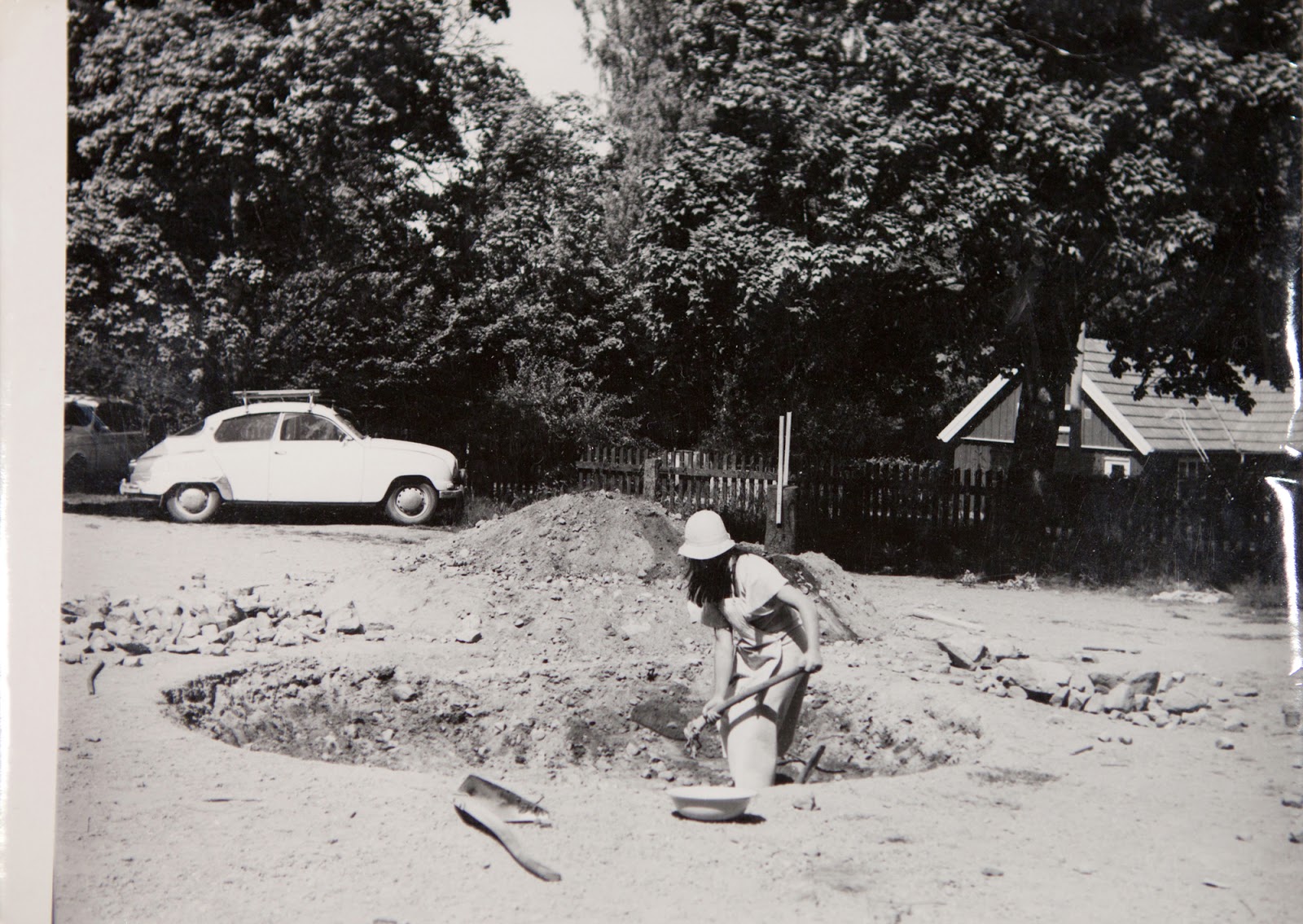
The new issue of the fantastic contemporary theory and research journal Widok (View) is out now and ready to be read in its entirity online. The editors introduce the content of the issue, which is titled The Return of Landscape: "Many of the images presented here use distance (and sometimes also a change of vantage point) as a means of recognizing the mechanisms of seeing, as a starting point for reflection and action. Such is the work of Belgian artist Mishka Henner, analyzed by Alicia Guzman – Henner's photographs expose the scale of the American meat and oil industries and their dire effects on the environment, but also offer the viewer an intriguing aesthetic experience, by creating images simultaneously alluring and unnerving. The representation of rapidly changing natural landscapes becomes an especially pertinent topic in the age of the Anthropocene – examined by Sidsel Nelund in her review of Haus der Kulturen der Welt's Anthropocene Project and by Susan Schuppli in the essay Can the Sun Lie? In his essay devoted to representations of war in the works of Sophie Ristelhueber and Werner Herzog, Krzysztof Pijarski asks whether the traditional genre of aerial photography may hold a subversive potential. However, not all of the presented landscapes are as directly political as the work of Henner, Ristelhueber, Herzog, and the creators of the film Inuit Knowledge and Climate Change. Although often naturalized, they often call for political and philosophical questions. And so Łukasz Zaremba writes about the process of radical commercialization of Polish landscapes after 1989 and the recently passed “landscape bill,” constructed with the aim of "cleaning up" and "aestheticizing" contemporary urban and suburban views. In the essays by Max Symuleski and Piotr Schollenberger, the distance necessarily involved in the production of images of the Earth from outer space has a profoundly destabilizing effect on the viewer's subjectivity. We also examine the archive of Polish artist Teresa Murak (with Sebastian Cichocki's commentary); as well as the work and thought of Jan Gwalbert Pawlikowski, the first proponent of landscape preservation in Poland (in an essay by Mateusz Salwa). Lastly, the photographs of Dutch artist Awoiska van der Molen are analyzed by Ernst van Alphen and the diverse art projects of Francis Alÿs is discussed with the artist in conversation with Magda Szcześniak."
(photograph above: Teresa Murak, Sculpture for the Earth, Ubbeboda, 1974)
(photograph above: Teresa Murak, Sculpture for the Earth, Ubbeboda, 1974)

Subscribe to:
Posts (Atom)